

hug-sickness is real
✨a reminder that hugs help. a lot.✨

When my then-10-year-old son went to sleep-away camp for three weeks, we got four letters home, all expressing homesickness or flat out dislike for his camp. Like this:
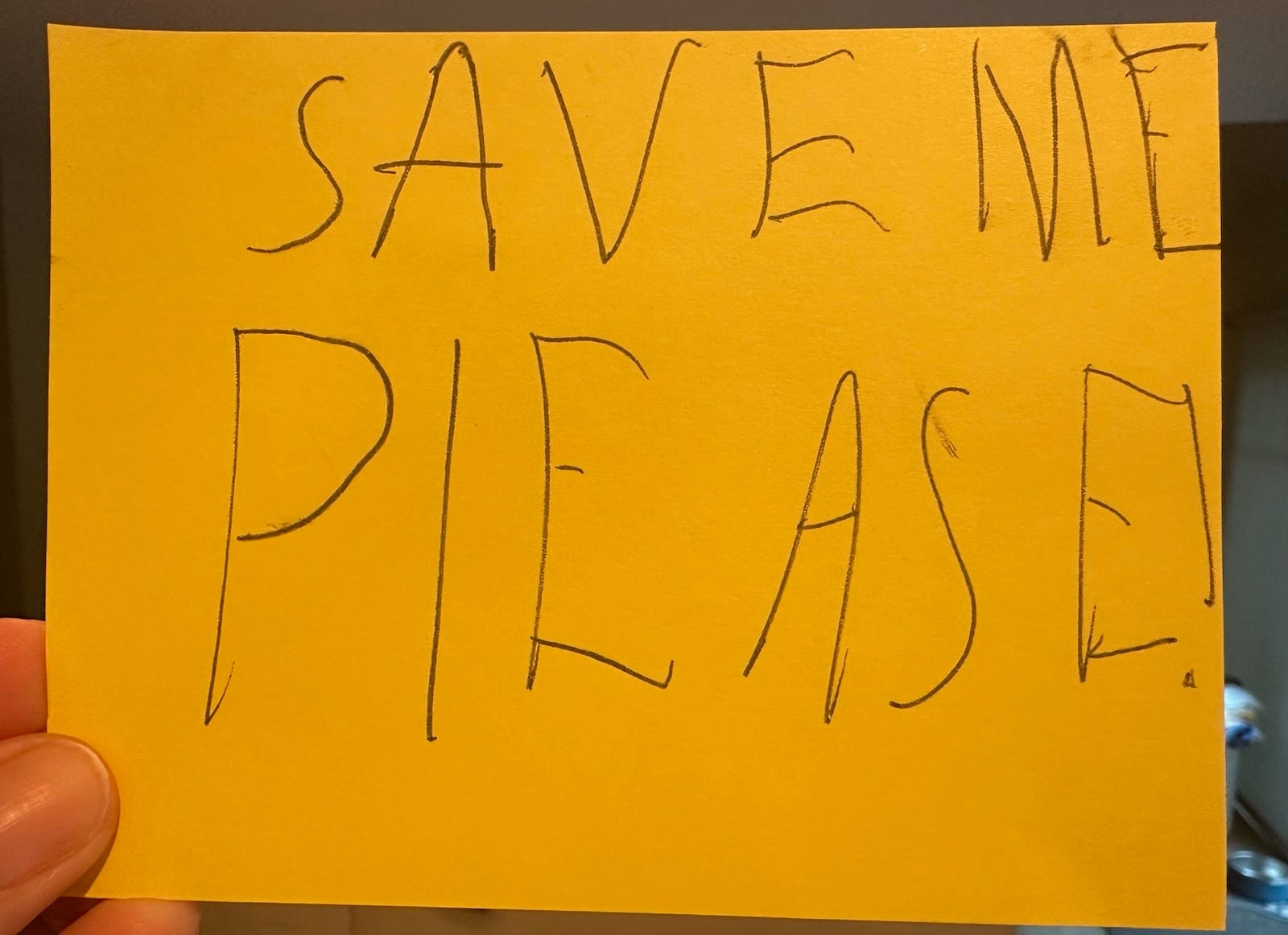
He’d been to camp before, but he’d wanted to try a new, sportier camp. This made sense—he’s sporty—but the shift would mean that he’d no longer be at camp with his older brother. He said he’d be fine.
Despite the dire notes, all the camp photos revealed a kid who was clearly not suffering; fun was being had. I spoke to the camp director twice during the session, and all the counselors and adults in my son’s orbit concurred that he seemed happy and engaged. So, we chose to have him stay for the duration, sending him love notes of encouragement to find his way.
As we pulled up to retrieve him, he ran toward us with a huge, unfiltered smile; I barely opened my car door and all hundred pounds of him piled onto me. We hugged for what felt like a full, pure minute. While embracing, I felt the muffled heaves of a cry— he later told me they were tears of joy.
When we eventually released enough to look at each other, he appeared peaceful and content. He went on to hug Dad and sis, before taking us all on a walking tour of the camp.
He played baseball, wiffle ball, rugby, tennis and basketball, and was eager to show us the landscapes where all those activities took place. He loved archery and took us to the range. He showed us his favorite spot to skip rocks. He tried new foods—which, for a notoriously picky eater, was a huge deal—and he pointed out his assigned table in the mess hall; he even sang some camp songs to us. He loved the nature program, and told us about a frog he’d found that took up residence on his shoulder one day. He’d also befriended a butterfly—that he called Butter—and he marveled that every single day of camp, Butter found him. (Butter found him on our tour too!) He brushed his fingertips along shelves of book bindings in the library and pulled one out that he’d read; he showed us decks of cards and where he’d played a favorite game. He learned to play guitar, and told us excitedly that he can play “Stand By Me”. He liked many counselors and his cabin mates, and he relayed stories that led to eye-twinkling smiles, including when he was awarded ‘Camper of the Week’. He slept well and loved polar bear plunges into the lake each morning.
My husband and I kept giving each other confused telepathic looks—to our surprise, he seemed to love camp.
Once we got home that evening, after a long New England drive and a soapy shower, and once the ripest of duffel bag items made their way into the washer, we retired for bedtime. He requested a pillow-talk, which is code for an extra-long bedtime chat with Mom.
A few questions into our talk, I asked him if he ever cried at camp, which inadvertently pricked awake tears and some dormant emotions. Turns out, he cried quite a bit—specifically at bedtime, in the privacy of his bunk. I’ll note that this child is not prone to sadness or separation anxiety; in fact, he’s more of a rough and tumble, confident and resilient type. But as we pillow-talked, he revealed that although he made friends and had fun, at day’s end, he felt lonely. He also shared that he hadn’t told these feelings to anyone at camp; instead, he acted like he was fine. He said that the hardest part of camp was going three weeks without a hug.
As a former educator of kids myself, I’m aware of the laws and procedures that prevent adults from touching kids in community settings—for very good reasons; but for kids who crave the love language of physical touch as a key ingredient in their recipe for wholeness, the casualty of such restrictions, could be their well-being.
The big difference between his former camp and this one is that in the past, his brother had been there; and each evening, his brother habitually popped into his cabin to say good-night. When they initially told me about this routine, I remember being unable to discern if such wholesome cabin visits were welcomed by my younger (“kind of cool”) son. I remember noting that the connection was initiated—always—by my older son. So, I assumed that the bid for affection was more needed by my older son, and my younger son simply acquiesced.
Turns out, I was wrong. That connection sustained my younger son; he just hadn’t known it, until he didn’t have it. In his letters home, he couldn’t articulate why he disliked camp, but now that the emotional pressure valve had released, his sentiments surfaced: he was hug-sick.
As his mom, this brought on lots of feels.
First, a deep gratitude for a brotherly love in a sibling-ship that (from my vantage point) often looks like anything but love.
Second, a heartache for the child’s instinct to keep heavy emotions bottled up.
And third, a validation that all the hugs—at every turn, in every mood—have mattered. Some of my hugs have been received with an air of obligatory annoyance, but I’m now certain that they’ve served as a daily dose of physical tenderness, that has been essential. (We parents try so hard to connect with our kids—without immediate or clear data to determine the efficacy of such efforts—so this feedback is gold.)
In the days after his return from camp, we started the audio book, The One and Only Family—the latest release in his favorite book series by Katherine Applegate. We listened as the narrator, a silverback gorilla called Ivan, said this: “I wonder if everyone carries the weight of a secret sadness with them. Perhaps if it weren’t secret, it wouldn’t be such a burden.”
My son and I paused the book and wondered together about Ivan’s thought. We made the connection to his sadness at camp, and wondered, in retrospect, if camp may have felt better had he talked openly about his need for a hug with a counselor or a friend. I can’t be sure if he felt the impact of Ivan’s message like I did, but I hope the seed planted into his young heart that he doesn’t have to be alone in future sadness.
To observe the becoming of a young person is a remarkable thing. What a privilege to have a front row seat, and to be a trusted ally. Sometimes, I feel like I’m already homesick for this stage of life. As the kids slip into older versions of themselves, I already miss them, as strange as that sounds.
Toni Morrison’s book dedication to her sons in Sula (a novel that’s long been my favorite of hers) comes to mind:
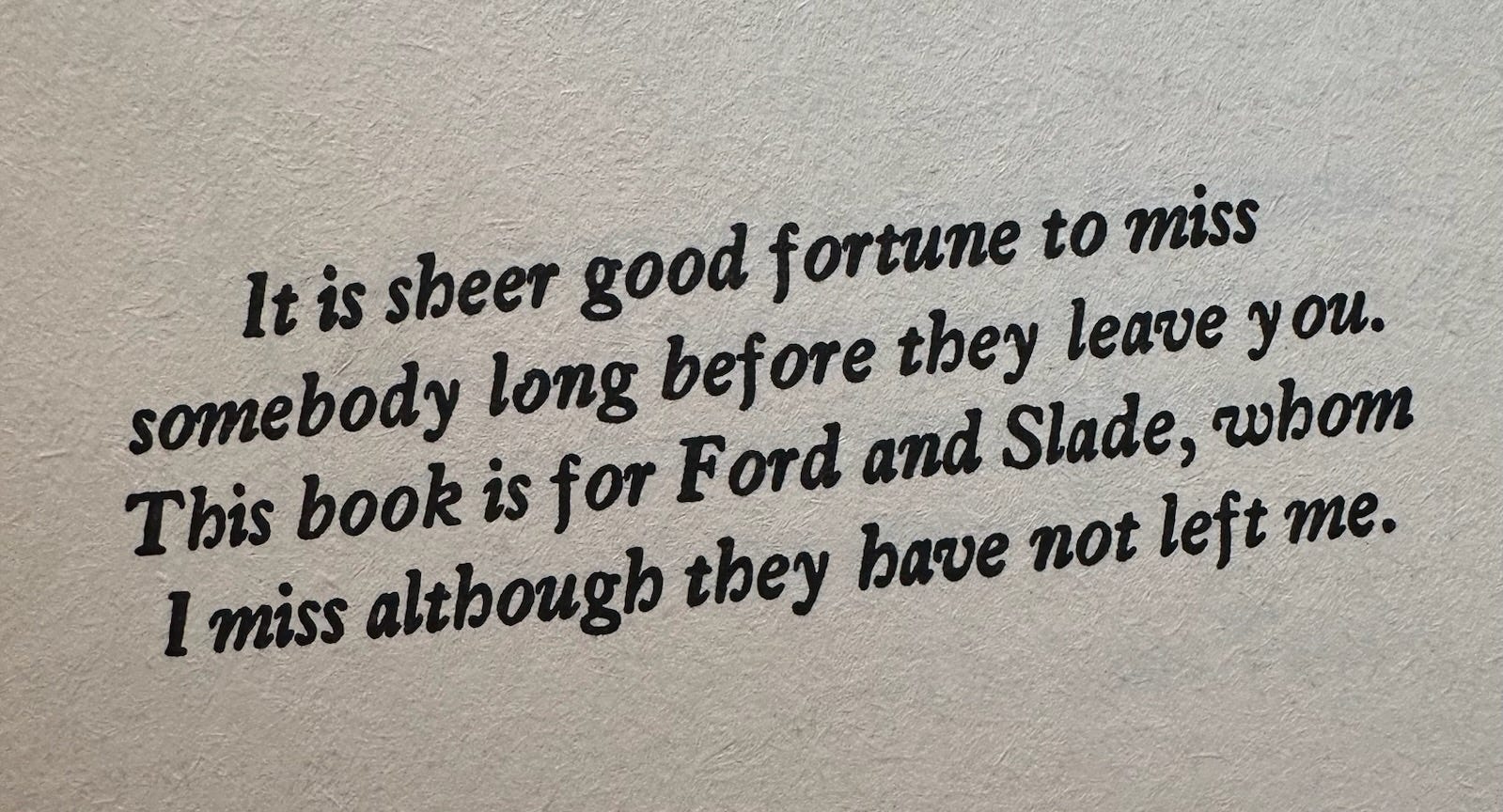
I’m not sure if there’s a word for the feeling of future nostalgia, but that’s the ocean I’m swimming in at present. It’s a realization that there will be a time, when I’m not able to extract and soothe the sadness of my child—a time when I’m longing for pillow-talks and car rides that enable such connection. My role as the primary-hug-provider will someday be filled (in part) by another, or by no one… and so begins that new ache inside my chest.
I suppose I hope that enough tough moments happen while they’re young so that we have the luxury of navigating emotions together, while we can. And to temper my swelling, nostalgic heart, I’m working on maintaining my gratitude for the sheer good fortune of being in these waters of motherhood at all.
Whether or not my kid returns to sleep-away camp in future summers, I’m grateful that his experience gifted me a deeper knowing of his inner operating system. And I’m hopeful that his newfound self-awareness will give him strength to ask for what he needs down the road.
What I know for sure, is that hugs matter. In fact, a quick Google search led me to the work of world-renowned family therapist Virgina Satir, who claims that we need 4 hugs a day for survival; 8 hugs a day for maintenance; and 12 hugs a day for growth. I can’t help but wonder if many of us quietly live with hug-sickness.
Sometimes, the simplest actions lead to the most profound shifts in our wellness.
So, hug on, my friend! And let’s grow.
🌱
If you’re glad you read this, please ❤️ it, right there at the bottom of the post. It would mean a whole lot to me.
🌱
Wondering what to expect with my posts each week? Here’s the breakdown.
🌱
Other ways I can support your becoming self today:
New episodes of Becoming Everwell with Linds will drop soon! In the meantime, enjoy past episodes.
Sign up to join the Year of Meaningful Connection Letter-Writing Project to stay in touch with those who matter most.

Collaborate with me to host a Letter-Writing gathering for you and your bookclub, friend group or neighbors. Schedule a free call to discuss. You’ll thank me later!
🌱
Ways you can support my Substack growth (thanks for asking!):
Forward this essay to friends who might care, and encourage them to become a free subscriber.
Fuel me with a latte to help sustain the publication ;)
Invest in my mind at work by upgrading your subscription.
🌱
Essay in its original form was published by Lindsay Hurty on July 20, 2024 as “the hug-sickness”.
🌱

I loved this so much...it made me want to give YOUR son a hug!!! Girl, I'm right with you, living in the future missing of kids that are actually home for the summer. Grateful isn't a big enough word. What a wonderful relationship you have cultivated with your boy. Big hugs to that! xx